
On Broke Boy Propaganda and the New Romcom

Lucy (Dakota Johnson) is a professional matchmaker in New York City, constantly quantifying people by their “market value” — anything from age, height, ethnicity, income, and education. In her own private life, she stands between two men — a “unicorn” millionaire (Pedro Pascal) and her broke struggling actor ex (Chris Evans).
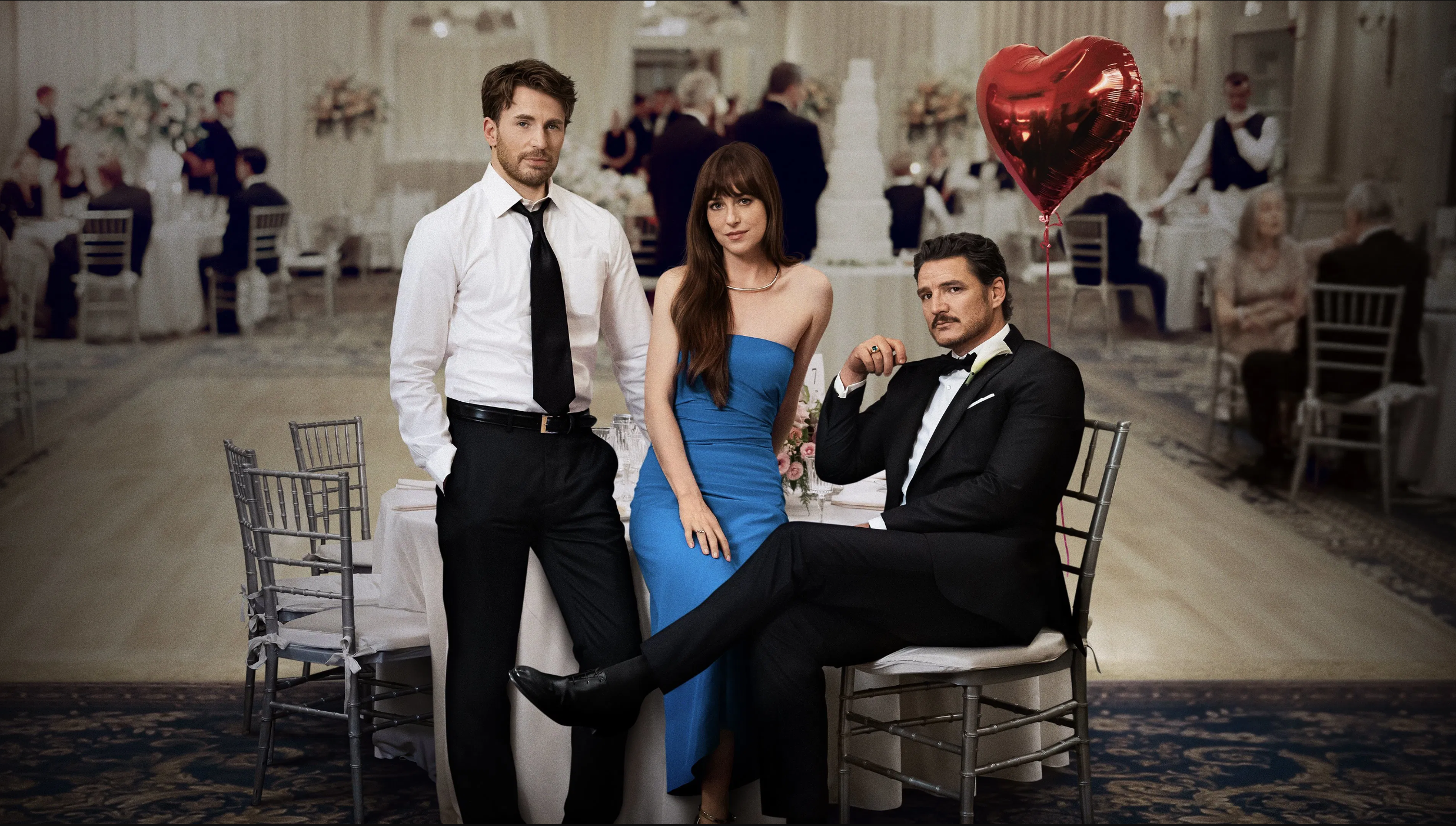
The film shows a culture that appraises partners like assets and investment portfolios, yet affirms love as something irreducible. Some have called it broke boy propaganda for romanticizing choosing love over money in a way that’s naive in today’s economy, while others argue it’s an anti-capitalist rom-com that tries to show how dating has become a marketplace.

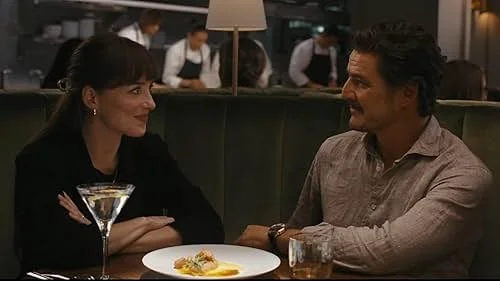
If broke boy propaganda says “Love is all that matters,” its polar opposite gold-digger propaganda says “Love is a luxury.” These binaries we inherited perpetuate an either/or narrative leaving us unsatisfied and hungry for more — or rather for something else.
Enter — the high value man.
What if, somewhere beyond adolescent romance and soul-less stability was a third option that would reconcile romance with reality, once and for all putting an end to the divide between our heart and mind?
The story could no longer be about which one we pick or sacrifice, but about the woman we must become to meet the third man.
The high value man indeed demands a high value woman.
The high value romance would confront us with our own romantic propaganda, inviting us to retire old scripts and upgrade them with fresh, new ones.

If men like Maximus, Aragorn, and Neo are the closest to the High Value Third Man Option, where are they in romcoms? Short answer: NOWHERE — and this is by design, not by accident.
Romcoms, as an industry genre, are built on misalignment, immaturity, and delay. Their engine is insecurity: missed calls, mixed signals, emotional confusion, performative banter, and the fantasy that love arrives before orientation.
Maximus, Aragorn, and Neo break the genre. They share something romcoms cannot metabolize: They are already oriented. They know who they are. They are not confused about love or purpose. They do not play emotional games. They move toward commitment without irony.
Rom-coms require the man and the woman to learn responsibility through romance.
These men arrive responsible — and romance becomes a byproduct, not a lesson. That removes the genre’s primary source of tension.
Because it can’t write these men in romantic contexts, Hollywood uses substitutes that are easy to stretch across 90 minutes of banter and misunderstanding.
Aragorn would end the movie in 20 minutes. He’d state his intention. Act consistently. Choose the woman without hedging. Roll credits.
Rom-coms were never really about love. They were about deferring adulthood while romanticizing it. Maximus, Aragorn, and Neo represent something post-ironic: duty, meaning, sacrifice, and commitment without apology. They don’t flirt. They choose. And choice is narratively dangerous in a culture built on optionality.
There is no lack of high-value men and women in cinema. There is a lack of romantic imagination capable of holding them.
It’s not that audiences wouldn’t want “high-value romcoms." It’s that the modern rom-com has no language for them — yet. And that may well be the new frontier of the genre.
The New Romcom begins where our old fantasies end.
An attempt at defining the High Value Archetypes:
-
He is not defined by spectacle. He is anchored in responsibility, self-respect, and purpose, and wherever he goes, there is a subtle but unmistakable sense of safety—an easing of the nervous system, a clarity in the air. His presence expands rather than consumes. People stand a little taller around him, not because they are impressed, but because they feel steadied.
He is internally governed. His morals are not seasonal, nor are they borrowed. Discipline, for him, is not a performance but a private agreement with himself. He keeps his word because it would feel unnatural not to. Integrity is not something he advertises; it is something he inhabits.
A high-value man takes responsibility—quietly, fully—for his life, his emotions, and his impact. He does not confuse self-mastery with emotional repression, nor ambition with restlessness. He is driven, yes, but not by the hunger to be seen. Validation does not steer him; meaning does. When he moves, it is with intention, not urgency.
He protects what he loves in ways both visible and unseen—emotionally, spiritually, materially. His leadership is not loud. It does not dominate or demand. It invites trust through consistency, through presence, through the rare capacity to remain steady under pressure. Strength, in him, is spacious enough to hold tenderness without collapse.
He does not chase power. Power gathers around him, drawn by his reliability, his groundedness, his clarity. People listen when he speaks—not because he insists, but because his words carry weight.
High value, in the end, has very little to do with status. It is capacity—the capacity to hold responsibility, intimacy, and truth without needing to diminish anyone else.
-
She does not announce her worth; she lives inside it. Her sense of value is so deeply internalized that it no longer requires negotiation, defense, or display. She moves through the world as someone in right relationship with herself, and in doing so, she quietly elevates truth, beauty, and life itself. Her presence refines the room. Not by force—but by coherence.
-
A high-value romance is not an escape from the self, but a revelation of it. It is the kind of partnership that clarifies rather than distracts, that brings one into sharper focus instead of dissolving identity into longing or fantasy. At its core, it is built on mutual respect, devotion, and a shared commitment to growth—not as a slogan, but as a lived reality.
