On Broke Boy Propaganda and the New Rom-Com

Lucy (Dakota Johnson) is a professional matchmaker in New York City, constantly quantifying people by their “market value” — anything from age, height, ethnicity, income, and education. In her own private life, she stands between two men — a “unicorn” millionaire (Pedro Pascal) and her broke struggling actor ex (Chris Evans).

The film shows a culture that appraises partners like assets and investment portfolios, yet affirms love as something irreducible. Some have called it broke boy propaganda for romanticizing choosing love over money in a way that’s naive in today’s economy, while others argue it’s an anti-capitalist rom-com that tries to show how dating has become a marketplace.

If broke boy propaganda says “Love is all that matters,” its polar opposite gold-digger propaganda says “Love is a luxury.” These binaries we inherited perpetuate an either/or narrative leaving us unsatisfied and hungry for more — or rather for something else.
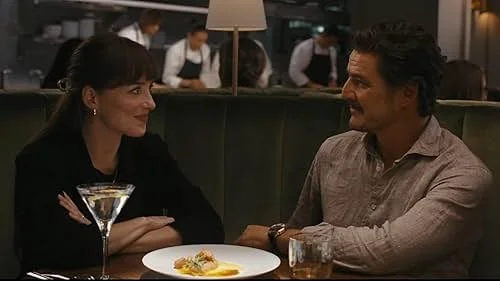
Enter — the high value man.
If broke boy propaganda denies reality and gold-digger propaganda denies the heart, high value man propaganda would attempt to reconcile romance with reality. The story could no longer be about which one we pick, but about which self we choose to become — the high value man indeed demands a high value woman.
The high value romance invites us to confront our own romantic propaganda so that we may retire old scripts and upgrade them with fresh, new ones.
The new rom-com begins where our old fantasies end.